The Book Thief post #4: The theory that provided most insight

Overall this novel was not only entertaining but very educational. It taught me things that I did not know such as children were sent to adopted families so they were safe with them. It provides insight that others may not have known or taken into account with the issues within WWII.

I think that the postcolonial literacy theory was the best perspective on how to view this book. Like mentioned before, this book took place during WWII when Hitler was in power and killing millions of Jews. Post colonialism can be defined as, “occurring or existing after the end of colonial rule,” (google). When all the terrible events were happening during this time, such as the mass murder of Jews or bombing of cities killing many innocent people. This time in history has affected many, many people during the time everything was happening and even after. This left many people with post traumatic experiences such as depression.

Even though this event in history occurred almost a century ago, many families have lost a member due to the terrible things that were happening under Hitler’s command. The postcolonial literacy theory is the best example to provide insight on the events that occurred in the past that were explained and shown in this book.

Although this was a great book to read and I learned many facts I did not know before, I still have a few outstanding questions. In the beginning of the book, Liesel’s little brother passed away on a train. How did he pass away? Another question I have is why did the author write some words in German and not provide a translation in English?

The Book Thief post #3: the viewpoint from a postcolonial perspective

As mentioned in previous blog posts, The Book Thief takes place in a time during WWII, where Hitler was ruler of Germany and most of Europe. His mission was to create the perfect race, meaning he would capture and throw innocent Jewish civilians in concentration camps where they are sent to meet their death.

The problem with this is that there would not be a multi-cultural world and a majority of one culture. The Book Thief tries to emphasize the issue with Hitler having so much power and what it could do to others. By the Germans having so much power over other it puts the Jew at a lower class which goes against the human rights code. The Jews were severely affected by this as they were unreasonably targeted and killed. The shops and buildings they owned were destroyed, burnt down or vandalized just because of their race. This time of history, the racism was very bad and by having a ruler who is racist does not help as he sent a terrible example towards others.

Death narrates this novel about life and death during World War II. Liesel Meminger, the protagonist of the novel survives, but her friends and family do not. The Book thief allows readers to understand how terrible this time in history was as death is followed by millions of Jews killed in the concentration camps. Death also personally touches every character in the story. Max’s entire family is probably killed in those same camps, and he spends a desperate struggle fighting against potential death the entire novel. Neighbors to the Hubermanns have sons, brothers, fathers, and uncles who die in the war, just as the Hubermanns’ son is also out fighting for the Nazi cause. Hans has friends in the army who die while fighting with him, and he himself narrowly avoids dying while out on patrols. Death can come at any time, in any number of ways, and is an inevitable part of war, and of life.

This was such a terrible time in history as many people are still being affected by it today. It will never be forgotten as many lives were taken and others were affected by a choice someone made.

The Book Thief Archetypes

Archetypes are a system that a character portrays in any story, movie, book, etc. They are given these roles based off of how they act and what part they play. In the novel, The Book Thief, there are a few archetypes that are easily spotted out when reading the novel.

Death:

With Death being the narrator, the archetype he portrays is “The Storyteller”. He is our guide throughout the story although he is not the antagonist whereas that would be Hitler. Storytellers often say things that are wise and foolish. Through the use of literal communication and metaphors, The Book Thief we will be able to spot Deaths use of this archetype throughout the book. Storytellers often exaggerate instances to give us an idea of what is happening or what is to come. “To prove to myself that you, and your human existence, are worth it” (Zusak, 33). This is a quote that represents how Death is trying to make the readers believe that he is not the typical “grim reaper” and is to only guide us throughout the story as ‘The Storyteller’.

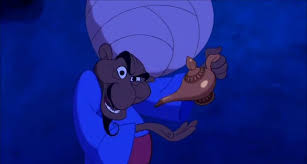
The storyteller in Disney’s Aladdin informs us we are in Agrabah, somewhere in the Middle East.

Ilsa Herman

Ilsa Herman is the mayor’s wife. In the beginning of the book Ilsa is shattered by the death of her son that she cannot function as a person. She has the “why me” attitude towards others and feels abused or used. Although once she begins interacting with Liesel, she opens up and show sensitivity and concern. She portrays “The Martyr” archetype in the story because she is always on the guilt trip and tries to gain attention from others through sympathy for herself.

Liesel Meminger

Although Liesel is the protagonist in the story, she may also be considered “The Trickster” archetype. Liesel feels deprived and as though she has been treated unfairly through no fault of his own. Although she also steals books and started stealing food from farmers with her friend, Rudy. Liesel seems as if she is an innocent little girl but she is able to come up with plans to steal from others. They stole apples and they began stealing onions and potatoes. They come up with a plan to steal from Otto Sturm, who is a boy from school who delivers food to the priests every Friday.

Bugs Bunny is considered a trickster because he seems as if he is an innocent bunny but he tends to hurt his opponents and win.

The Book Thief post #1: The Viewpoint of Death

The Book Thief by Markus Zusak is not your typical WWII novel where it is coming from a person’s perspective, but from the one thing most people fear, Death. Death is a compassionate character who tells us about a girl growing up in Germany during WWII. She steals books because she wants to learn how to read and she finds comfort in them.

In the prologue, death describes his work for a ‘chocolate brown sky’ when he collects people’s souls. He reveals that he has seen the book thief, Liesel Meminger three times. The first time he saw her was on a train where he had come to collect the soul of a small boy. The next time Death saw the book thief was when a pilot had crashed his plane. The third time he saw the book thief, a German town had been bombed. The book thief was sitting on a pile of rubble, holding a book. Death followed her for a while, and when she dropped her book, he picked it up.

When he encountered Liesel, he titles her as “the book thief” (Zusak 8). Death is described as having emotion over seeing Liesel’s distress, which has been established as out of the ordinary for his character. Zusak creates a perspective by making the readers first believe Death as a figure who is cold-hearted and emotionless when it comes to reaping souls, but also as a character with a soft spot for a little girl. This character trait of death shows the duality of man through a character who is cold, but has another dimension when it comes to his regret for not being able to comfort Liesel.

Zusak, Markus. The Book Thief. New York: Alfred A. Knopf, 2013. Print.